5 Most Common Causes of Roof Leaks in Malaysian Homes
You know how the weather in the Klang Valley can change from blistering heat to a violent storm in twenty minutes? That rapid shift is exactly what makes maintaining a roof here so difficult. Malaysia receives an average of 2,400mm of rainfall annually, with intense monsoon downpours that can drop over 60mm of water in a single hour.
Most homeowners only look up when they see a water stain spreading across their ceiling. From what we’ve seen, that stain is usually the final symptom of a problem that started months or even years ago.
We’re going to break down the specific failure points our team encounters most often in Petaling Jaya and Kuala Lumpur. Let’s look at the data, the materials that actually work in our climate, and the practical steps you can take to stop leaks before they destroy your ceiling.
1. Damaged or Missing Tiles
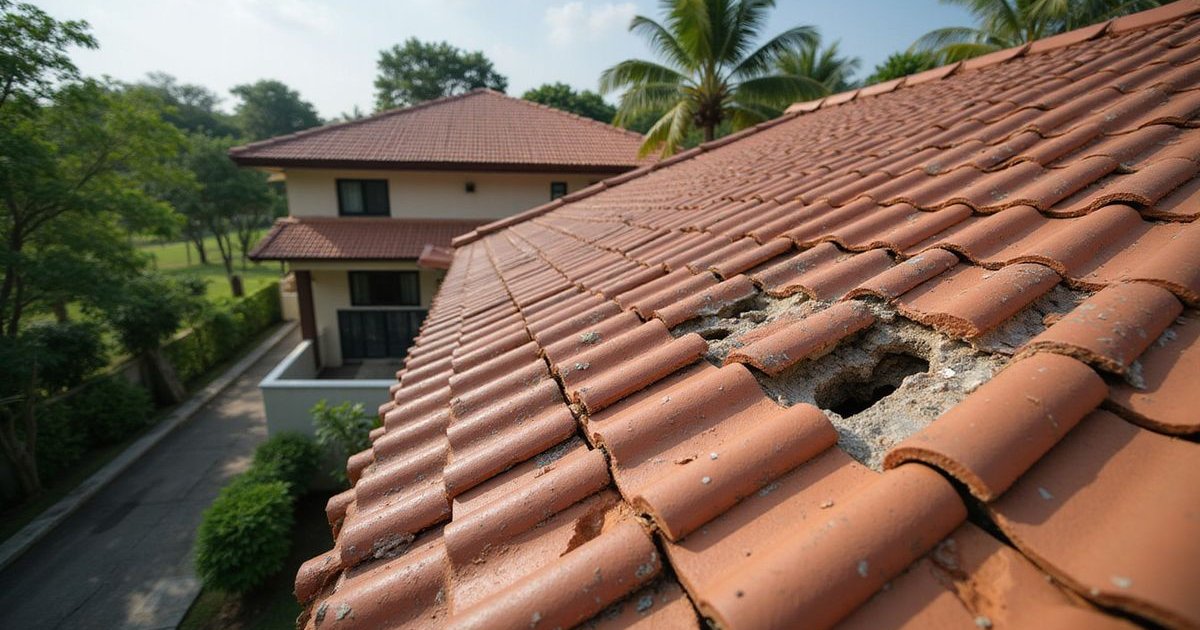
Clay and concrete tiles are the standard for landed properties in Malaysia, with brands like Monier and Lama dominating the market. While a high-quality concrete tile can structurally last for generations, it is still vulnerable to localized damage.
Common causes of tile damage:
- Physical impact: Falling durians or heavy tree branches often crack brittle tiles.
- Thermal stress: Daily temperature swings from 24°C at night to 34°C during the day cause constant expansion.
- Age: Concrete tiles eventually become porous after 20 to 30 years, absorbing water instead of shedding it.
- Poor installation: “Cowboy” contractors often skip nailing every tile, leaving them loose enough to slide.
Signs to look for:
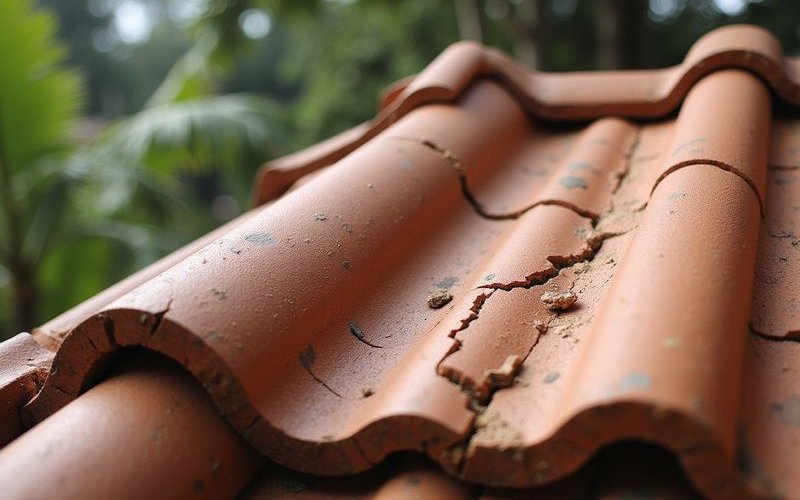
- Visible cracks or breaks when viewing from ground level
- Tiles that have shifted out of alignment
- Gaps where tiles should be
- Granules or fragments in gutters
Actionable Tip: Walking on the “Nose”
We often see well-meaning homeowners cause more damage by walking on their roofs incorrectly. If you must go up, never step on the center of a tile. Always place your weight on the “nose” or the bottom 2 inches of the tile, where it overlaps the one below it. This transfers your weight directly to the wooden batten underneath rather than the fragile clay surface.
Prevention:
- Avoid walking on roof tiles unless absolutely necessary.
- Keep trees trimmed back at least 2 meters from the roof edge.
- Schedule regular inspections to catch damage early.
- Replace damaged tiles promptly.
2. Failed Flashing
Flashing is the metal strip that seals the joints where your roof meets a wall, chimney, or another roof section. It is statistically the most common entry point for water in Malaysian homes because it relies on sealants that struggle to survive our UV index.
Why flashing fails in the tropics:
- Corrosion: Cheaper zinc flashing (often the red #32 gauge) rusts quickly in our humidity compared to durable aluminium.
- Poor installation: Improperly lapped flashing allows water to wick underneath during heavy wind-driven rain.
- Sealant breakdown: Standard silicone caulk dries out and cracks within 2-3 years under the Malaysian sun.
- Movement: Thermal expansion causes metal and concrete to move at different rates, shearing the seal.
High-risk areas:
- Chimney bases
- Vent pipes and exhaust outlets
- Skylight edges
- Valley areas where roof planes meet
- Wall-to-roof junctions
Material Comparison: Zinc vs. Aluminium
| Feature | Zinc Flashing | Aluminium Flashing |
|---|---|---|
| Cost | Low (Budget Friendly) | Moderate |
| Lifespan | 5-10 Years | 20+ Years |
| Rust Resistance | Low (Prone to rust) | High (Does not rust) |
| Best Use | Temporary repairs | Permanent solutions |
Prevention:
Our team advises upgrading to aluminium flashing for any permanent repair. You should also ensure your contractor uses a high-grade, UV-resistant sealant like Sika Sikaflex or Pentens, which are formulated to withstand our specific climate conditions better than generic silicone.
3. Blocked or Damaged Gutters
Gutters that can’t drain properly cause water to back up under roof edges, leading to leaks in areas that wouldn’t normally have problems. This is especially critical during the Northeast Monsoon season from November to March.
How blocked gutters cause leaks:
- Debris accumulates in gutters.
- Water can’t flow to downpipes.
- Heavy rain causes overflow.
- Water backs up under roof tiles at the edge.
- Fascia boards and underlayment get wet.
- Water enters the building.
Common gutter problems:
- Leaves and debris accumulation
- Sagging sections that pool water
- Disconnected or blocked downpipes
- Damage from ladders or debris
Prevention:
- Clean gutters at least twice yearly.
- Install stainless steel gutter guards in areas with heavy tree cover.
- Check gutters after major storms.
- Ensure proper slope toward downpipes.
4. Deteriorated Underlayment
Under your tiles is a secondary layer of protection known as the underlayment or “sarking.” In many older Malaysian homes, this is a simple double-sided aluminium foil or a bituminous felt paper.
Why underlayment fails:
- The Oven Effect: Attic temperatures in Malaysia frequently hit 60°C, which cooks the plasticizers out of old foil membranes.
- UV exposure: Sunlight passing through slipped tiles degrades the material in weeks.
- Age: Most standard foils have a functional lifespan of 15-20 years before they tear.
- Moisture: Trapped humidity causes organic-based felts to rot.
Signs of underlayment problems:
- Leaks that appear during heavy rain but aren’t traced to obvious damage
- Multiple small leaks rather than one obvious source
- Leaks that seem to move or appear in different spots
Insider Insight: The “Crinkle Test”
We use a simple check to determine if your underlayment is shot. If you can reach the foil in your attic, touch it gently. Healthy foil should be flexible. If it sounds like dry leaves crunching or disintegrates into silver dust when you touch it, the waterproofing layer has failed completely and needs replacement.
Prevention:
- Include underlayment assessment in professional inspections.
- Address tile damage promptly to prevent UV exposure.
- Consider re-roofing when underlayment reaches end of life.
5. Poor Previous Repairs
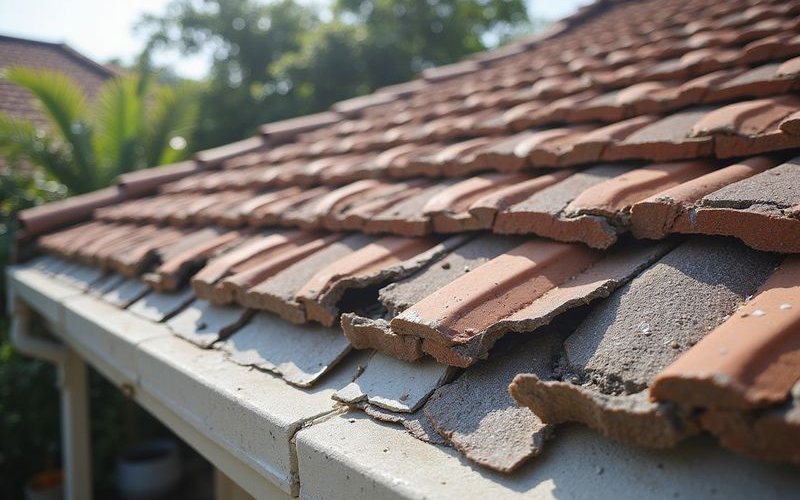
Ironically, one of the common causes of leaks we see is poor quality previous repair work. Many general handymen attempt to fix leaks by slathering black bitumen paint over the tiles.
Problems with bad repairs:
- Wrong materials: Using incompatible sealants or patches.
- Surface-only fixes: Treating symptoms without addressing causes.
- Improper technique: Tiles installed incorrectly or flashing not properly lapped.
- Temporary becomes permanent: Emergency patches left in place for years.
How to avoid this:
We recommend asking any potential contractor for “before and after” photos of similar repairs. You should also check the warranty terms. A reputable roofer in KL will typically offer at least a 6 to 12-month warranty on repairs, whereas “cowboy” contractors often disappear the moment they are paid.
Climate Factors Unique to Malaysia
Our tropical climate creates specific challenges that foreign roofing guides often miss:
Monsoon Rains Heavy rainfall can overwhelm marginal roofing systems. What might be a minor issue in drier climates becomes a serious leak during monsoon season when rain falls at intensities exceeding 60mm per hour.
UV Intensity Strong tropical sun accelerates degradation of sealants, underlayment, and some tile materials.
Humidity High ambient humidity means slower drying times when water does get in, promoting rot and mold growth.
Thermal Cycling Daily temperature swings (cool nights, hot days) cause expansion and contraction that stresses materials and joints.
When to Get Professional Help
Consider a professional inspection if you notice:
- Any water stains on ceilings or walls
- Musty smells in upper floor rooms
- Tiles visible damaged from ground level
- Your roof is over 15 years old without recent inspection
- After major storms with high winds or heavy rain
At Roofing Man, we provide free roof inspections throughout the Klang Valley. We’ll identify any issues and provide clear recommendations. Call us at 016-699 9077 to schedule your assessment.
Conclusion
Understanding what causes roof leaks helps you take preventive action. Regular inspections, prompt roof leak repair, and using qualified contractors for any work are your best defenses against water damage.
Don’t wait until you see water dripping from your ceiling. By then, hidden damage may already be significant. Proactive maintenance is always more cost-effective than emergency repairs.