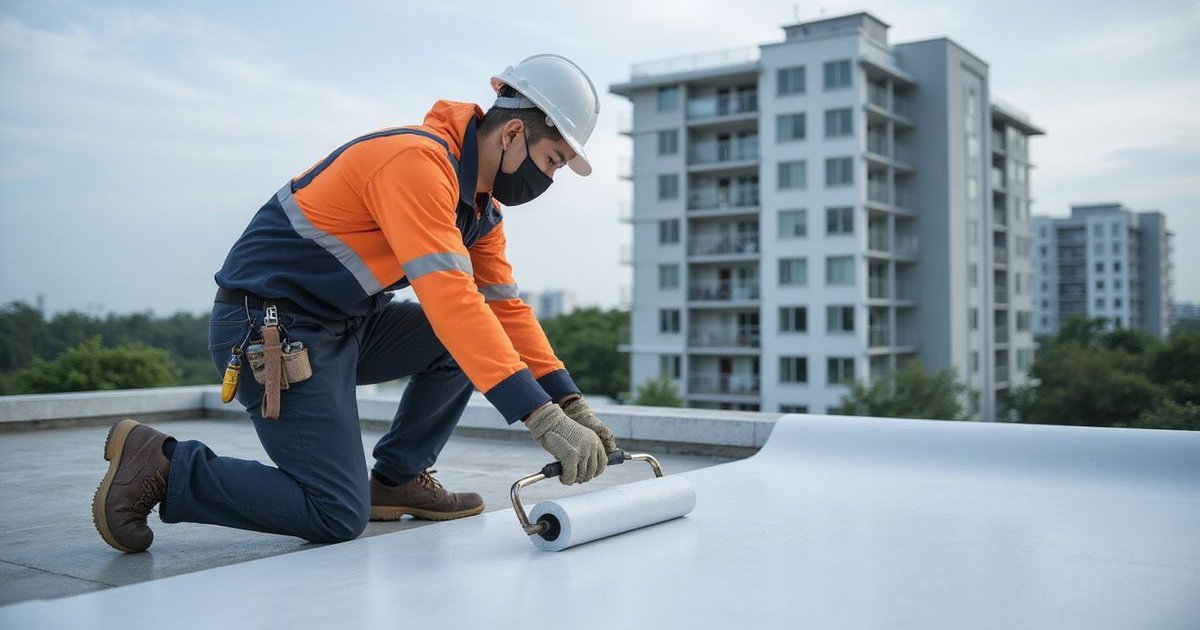
Having started this company back in 2013, I’ve spent over 16 years on roofs across the Klang Valley.
We built Roofing Man from a small five-person team into a full-service operation because we saw too many homeowners dealing with recurring leaks.
Water damage here isn’t just a nuisance.
It is a structural threat.
From what I’ve seen in Petaling Jaya and KL, the difference between a dry home and a disaster often comes down to choosing the right material for the right surface.
We are going to break down the specific waterproofing methods available in Malaysia, the real costs involved, and how to spot a bad contractor before they ruin your roof.
Why Waterproofing Matters in Malaysia
Our tropical climate is brutal on building materials.
We are dealing with more than just rain.
According to the Malaysian Meteorological Department, areas in the Klang Valley often see annual rainfall exceeding 2,500mm.
That volume of water tests every joint and seam in your roof.
Proper waterproofing creates a reliable barrier against this constant moisture assault.
Without it, you risk “concrete cancer” (spalling), where water rusts the steel reinforcement inside your concrete slabs.
This leads to expensive structural repairs that cost far more than a preventative coating.
Types of Roof Waterproofing
1. Torch-On Membrane (Modified Bitumen)
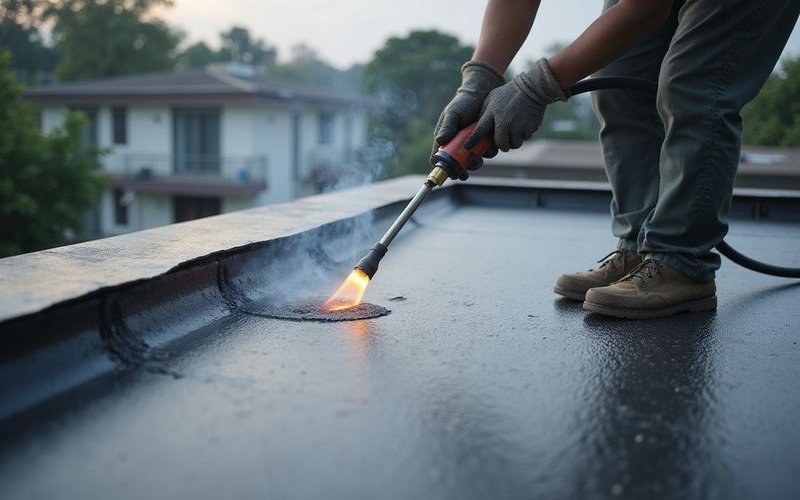
Torch-on membranes are sheets of modified bitumen that are heat-welded to the roof surface using a propane torch.
The “Insider” Detail: We prioritize brands like Sika or Hitchins for these applications because their UV resistance is superior. A critical installation detail is the “lap joint”—the overlap between sheets must be at least 100mm to ensure a watertight seal.
Pros:
- Excellent durability (15-20+ years)
- Seamless waterproof layer once fused
- Self-healing properties for minor punctures
- Proven track record on commercial concrete decks
Cons:
- Requires skilled application
- Not suitable for all roof types
- Fire risk during application
Best for: Flat concrete roofs (RC Flat Roofs), commercial buildings.
Typical cost: RM30-60 per square foot.
2. Liquid Membrane Waterproofing
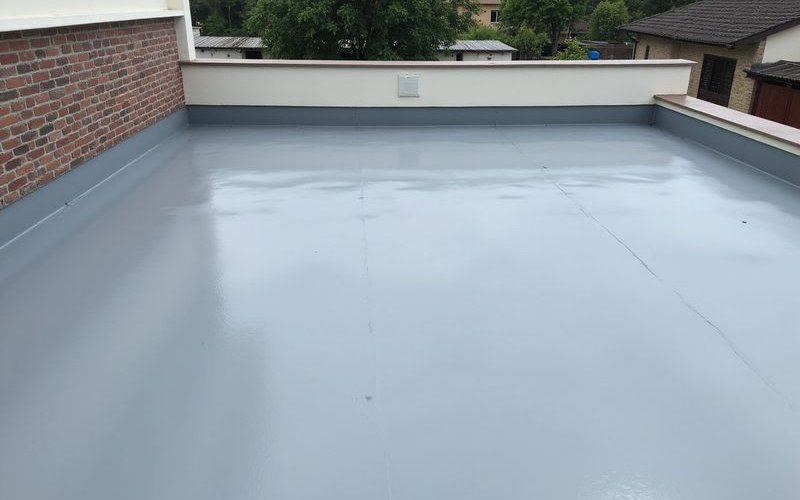
Liquid membranes are applied as a coating that cures to form a seamless, flexible waterproof layer.
The “Insider” Detail: We often use Polyurethane (PU) liquid membranes for roofs with many air conditioning compressors or pipes. The liquid can easily coat around these obstacles where a sheet membrane would require too much cutting and patching.
Types include:
- Polyurethane (PU) - Highly flexible and UV resistant.
- Acrylic - Cost-effective but less durable against ponding water.
- Bituminous emulsion - Good for concealed areas.
- Silicone-based - excellent UV stability.
Pros:
- Adapts to complex shapes and details
- No seams or joints
- Easier application around penetrations
- Can be applied to existing waterproofing
Cons:
- Requires careful surface preparation
- Multiple coats needed (usually primer + 2 coats)
- Application affected by weather (cannot apply if rain is imminent)
Best for: Complex roof shapes, renovation projects, areas with many penetrations.
Typical cost: RM20-50 per square foot.
3. Cementitious Waterproofing
A cement-based coating that bonds directly to concrete surfaces.
The “Insider” Detail: Products like Pentens T-305 are industry standards here. However, this method is semi-flexible at best. It should not be used on roofs that experience significant thermal expansion and contraction, as it will crack.
Pros:
- Excellent adhesion to concrete
- Breathable—allows moisture vapor out
- Lower cost option
- Can be applied to damp surfaces
Cons:
- Rigid—may crack with movement
- Limited UV resistance
- Not suitable for ponding water areas
Best for: Interior wet areas (bathrooms), water tanks, balconies before tiling.
Typical cost: RM15-30 per square foot.
4. Sheet Membrane (Self-Adhesive)
Pre-formed waterproof sheets with adhesive backing, applied without heat.
The “Insider” Detail: We frequently use this as a quick repair solution for smaller sections or underlayment for roof tiles. It is safer than torch-on systems since no open flame is required, making it ideal for residential areas with strict fire safety rules.
Pros:
- Consistent thickness
- Fast application
- No fire risk
- Good for areas near air conditioning units
Cons:
- Joints require careful sealing
- Not as adaptable to complex details
- Adhesive can fail in extreme heat if surface prep is poor
Best for: Regular-shaped flat roofs, areas where torch application isn’t possible.
Typical cost: RM25-45 per square foot.
Quick Comparison: Selecting Your System
| System | Durability | Best Use Case | Est. Cost (RM/sqft) |
|---|---|---|---|
| Torch-On | High (15+ yrs) | Large Concrete Decks | 30 - 60 |
| PU Liquid | Med-High (10-15 yrs) | Complex Roofs / AC Areas | 25 - 55 |
| Cementitious | Medium (5-10 yrs) | Bathrooms / Balconies | 15 - 30 |
| Self-Adhesive | Medium (10 yrs) | Low-Risk Flat Roofs | 25 - 45 |
Waterproofing Application Process
Regardless of method, proper waterproofing follows a general process.
We follow strict protocols to ensure the warranty remains valid.
Step 1: Surface Assessment
Inspection of the existing roof condition to identify:
- Structural problems requiring repair
- Existing waterproofing condition
- Drainage issues (checking for “ponding” marks)
- Penetrations and details
Step 2: Surface Preparation
Critical for waterproofing success:
- Removal of old, failed coatings
- Repair of cracks and defects (using V-groove cutting for cracks)
- Cleaning of surface contaminants
- Ensuring proper drainage falls
Step 3: Primer Application
Most waterproofing systems require a primer to:
- Enhance adhesion
- Seal porous surfaces
- Create uniform base for membrane
Step 4: Membrane Installation
Application of the chosen waterproofing system:
- Coverage of main roof areas
- Angle Fillets: Installing a 45-degree mortar fillet at wall-floor junctions to prevent cracking.
- Detailing at edges, penetrations, drains
- Building up thickness as specified
Step 5: Quality Verification
Testing and inspection:
- Visual inspection of coverage
- Ponding Test: Flooding the area for 24 to 48 hours to check for leaks.
- Documentation of completed work
Cost Factors for Roof Waterproofing
Several factors affect waterproofing costs beyond just the material per square foot.
Homeowners in Malaysia should budget for these variables.
Roof Area
The larger the area, generally the lower the cost per square foot due to economies of scale. Mobilization costs are spread out over more square footage on a factory roof compared to a terrace house porch.
Roof Condition
Extensive preparation work adds to costs. If we need to hack away old tiles or grind down multiple layers of old bitumen, labor costs will rise significantly.
Accessibility
Multi-story buildings or roofs with difficult access require more time and equipment. A 3-storey shop lot in KL might require scaffolding or a skylift (crane) to get materials up safely.
Complexity
Roofs with many penetrations, irregular shapes, or complex drainage patterns take more time. Detailed cutting and sealing around 10 different vent pipes is more labor-intensive than rolling membrane over a wide open space.
Material Choice
Premium systems cost more but offer longer warranties and better performance. Brands like Mapei or Fosroc often command a higher price point but offer better local support.
Choosing the Right System
Consider these factors when selecting waterproofing:
Roof Type:
- Flat concrete → Torch-on or liquid membrane (PU)
- Metal → Specialized metal coatings (Rust inhibitors + Acrylic)
- Tile → Underlayment or targeted treatment (Nano-waterproofing)
Expected Foot Traffic:
- High traffic → Reinforced systems, protective screed
- No traffic → Standard exposed membrane is sufficient
Aesthetic Requirements:
- Visible areas → Color-matched or decorative options
- Hidden areas → Function over appearance (Black bitumen is fine)
Budget:
- Premium systems cost more upfront but last longer
- Budget options may need replacement sooner
Red Flags to Watch For
When choosing a waterproofing contractor, beware of these common issues.
We frequently get called to fix “cheap” jobs that failed within six months.
- Vague specifications: “We’ll use waterproofing” without mentioning the brand or type (e.g., “SikaTop Seal 107”).
- Extremely low prices: If a quote is RM10/sqft for torch-on, they are likely cutting corners on surface prep.
- No written warranty: Reputable contractors stand behind their work with a formal document.
- Rushing surface preparation: This step takes the longest; skipping it guarantees failure.
- No test or inspection: A contractor who refuses to do a ponding test is a major risk.
Warranty Considerations
Waterproofing warranties vary widely.
You need to understand exactly what is covered.
- Material warranty: From the manufacturer (e.g., Pentens, Sika), covering defects in the chemical product itself.
- Workmanship warranty: From the contractor, covering installation problems like poor sealing or bubbles.
Quality contractors offer workmanship warranties of 2-5 years or more.
At Roofing Man, we provide up to 2 years warranty on waterproofing work because we control the quality of every step.
Maintenance for Longevity
Extend your waterproofing’s life with regular care.
We recommend a simple check-up every six months, especially after the monsoon season.
- Annual inspections for damage or wear
- Prompt repair of any punctures or tears
- Keeping drains clear of debris (leaves cause ponding)
- Avoiding sharp objects or heavy impacts
- Recoating as recommended by manufacturer (usually every 5-7 years for liquid systems)
Conclusion
Proper roof waterproofing is an investment in your property’s protection.
While costs range from RM15-60 per square foot depending on system choice, the expense is minimal compared to the cost of fixing water-damaged ceilings and parquet flooring.
You can save thousands in the long run by doing it right the first time.
For a professional assessment of your waterproofing needs, contact Roofing Man at 016-699 9077.
We will evaluate your roof and recommend the most suitable solution for your situation and budget.