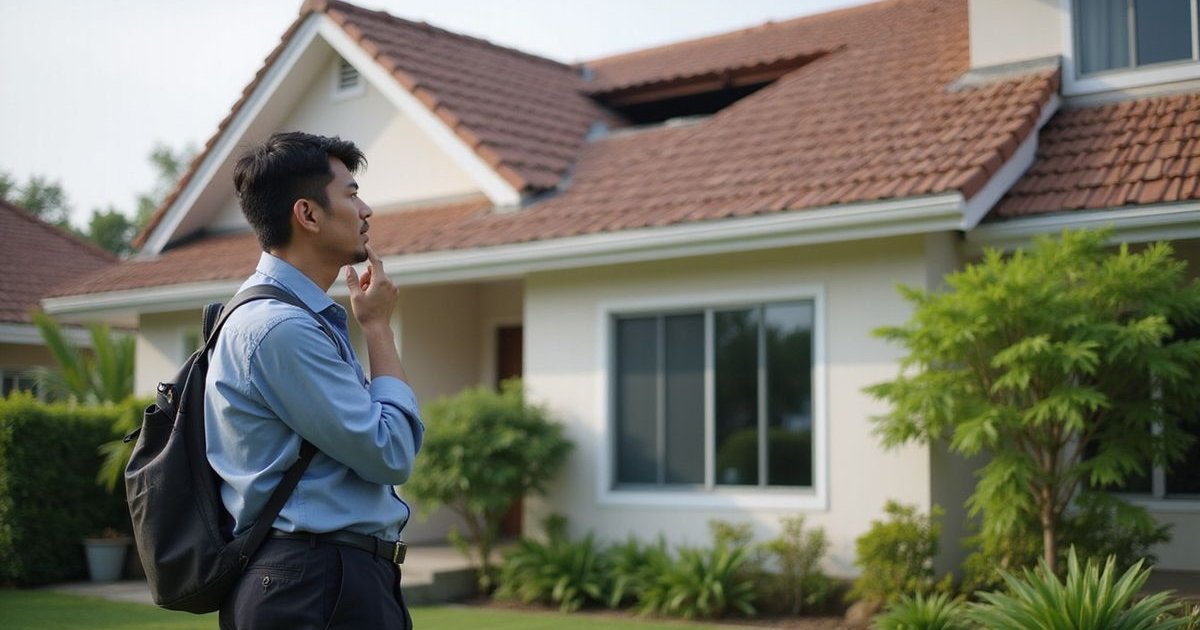
To homeowners in the Klang Valley, a sudden thunderstorm can turn a minor drip into a living room disaster in minutes.
We know the temptation to grab a ladder and “quickly fix” that leak is strong, especially when you’re watching water pool on your expensive parquet flooring.
Attempting a DIY repair often seems like the fastest way to save money and protect your property.
But from what our team has seen over the last decade, well-intentioned DIY efforts frequently turn small issues into RM5,000 repair bills.
We are going to break down exactly which maintenance tasks are safe for you to handle and where the line is drawn for professional intervention.
Safe DIY Roof Tasks
There are several preventive measures you can take to extend your roof’s lifespan without risking injury or damage.
We recommend sticking to these maintenance activities that can typically be done safely with basic tools:
1. Pre-Monsoon Gutter Cleaning
Blocked gutters are the number one cause of overflow leaks during Malaysia’s heavy November to March rainfall.
You can usually handle this yourself using a sturdy ladder and a scoop.
Key Tools:
- A stable A-frame ladder (never lean a straight ladder against a plastic gutter).
- Heavy-duty work gloves.
- A plastic scoop or a modified PVC pipe to remove wet sludge.
- A garden hose to flush the downspouts.
2. Ground-Level Visual Inspection
You don’t need to be on the roof to spot the early warning signs of failure.
Our experts suggest using a pair of binoculars to scan your roofline once every six months.
What to look for:
- Shifted tiles: Look for Monier or clay tiles that have slid out of alignment.
- Algae growth: Dark patches often indicate water retention, which weakens concrete tiles over time.
- Rusted flashing: Check the metal strips around your chimney or where the roof meets a wall.
- Sagging: Any dip in the roofline could suggest termite damage to the timber trusses underneath.
3. Clearing Light Debris
Fallen branches and leaves trap moisture against your roof tiles, accelerating decay.
You can often remove this debris using an extended-reach tool while keeping your feet firmly on the ladder or the ground.
Pro Tip: Telescopic pole saws or cleaners, available at hardware stores like Ace Hardware or Mr. DIY, allow you to clear debris without ever stepping on a fragile tile.
4. Minor Sealant Application
If you spot a small gap around a vent pipe that is easily reachable from your ladder, applying a high-quality sealant can be a temporary stop-gap.
We recommend using products specifically designed for our tropical climate, such as Selleys silicone or a bitumen-based sealant, rather than general-purpose fillers.
Warning: Silicone does not stick to wet surfaces. You must wait for the area to be bone dry before applying, or the seal will fail immediately.
When to Call a Professional
Some roof issues require specialized diagnostics and materials that aren’t available on the consumer market.
We advise calling an expert for the following situations to ensure the repair lasts:
1. Active Leaks During Rain
If water is actively entering your home, the entry point on the roof is rarely directly above the drip on your ceiling.
Water travels along rafters and beams—a phenomenon known as capillary action—meaning the actual hole could be 10 feet away from where you see the leak.
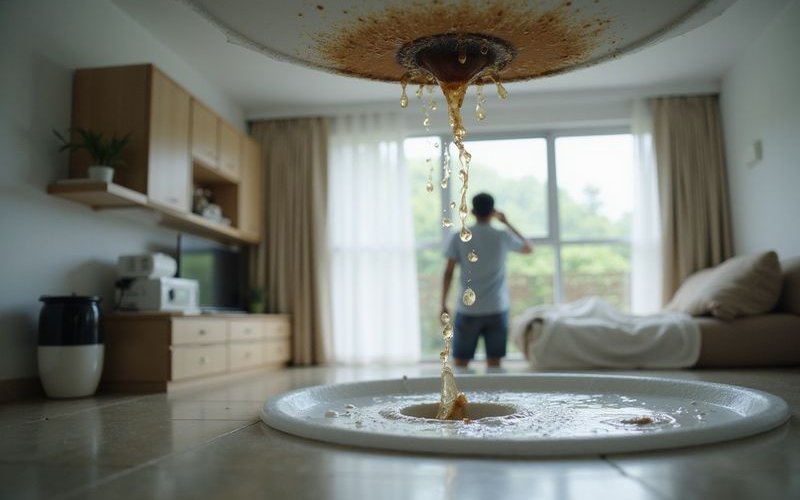
Our technicians use moisture meters and thermal imaging to trace the water’s path back to its true source.
2. Tile or Shingle Replacement
Replacing a single tile might look easy in a video, but the reality involves significant weight and risk.
Standard concrete roof tiles, like the popular Monier Elabana series, weigh approximately 4.2kg to 5kg each.
Why this is risky:
- Chain reaction: Lifting one tile often dislodges or cracks the surrounding old, brittle tiles.
- Hidden clips: Many tiles are interlocked or nailed down; forcing them up breaks the fastening system.
- Walking damage: Stepping on the unsupported edge of a tile (the “water course”) will almost certainly crack it.
3. Flashing and Valley Gutter Repairs
Metal flashing around chimneys and valley gutters are common failure points in Malaysian homes.
Proper repair here involves more than just slathering tar over the crack; it requires removing the surrounding tiles and installing new aluminium or lead flashing sheets.
4. Any Work Requiring Roof Access
If the job requires you to leave the ladder and walk on the roof, the risk of injury increases exponentially.
Roof surfaces in our humid climate are frequently covered in a thin, invisible layer of moss or algae that becomes like ice when wet.
5. Concrete Flat Roof Waterproofing
Many terrace houses in PJ and KL feature a concrete flat roof over the porch or balcony.
We often see these leak due to “ponding,” where water sits for days because of poor drainage slope.
The professional solution: This requires specialized applications like torch-on membranes or PU (polyurethane) grouting injections, which require precise temperature control and surface preparation to bond correctly.
6. Structural Sagging
If your roofline looks uneven, you may have a structural issue with the timber rafters, possibly due to termite infestation or prolonged water damage.
This is a critical safety hazard that requires an immediate structural assessment, not a patch job.
The Hidden Costs of DIY Gone Wrong
Many homeowners focus on the upfront savings of DIY without calculating the cost of failure.
We have compiled a comparison based on current market rates in 2025 to show the potential financial impact.
Cost Comparison: DIY vs. Professional Correction
| Scenario | Initial DIY Cost (Approx.) | Professional Correction Cost |
|---|---|---|
| Leaking Tile | RM50 (Sealant tube) | RM800 - RM1,500 (To remove silicone, replace cracked tiles, and fix leak) |
| Flat Roof Seal | RM200 (Waterproof paint) | RM2,500+ (To grind off wrong paint and install torch-on membrane) |
| Flashing Repair | RM100 (Bitumen tape) | RM1,200+ (To replace contaminated flashing and surrounding tiles) |
“I’ll just use some sealant” Applying sealant over a dirty or wet crack is the most common mistake we see.
The water continues to seep in underneath the sealant, rotting the timber battens unnoticed until the ceiling plaster collapses.
“The video made it look easy” Professionals complete these tasks quickly because they have done them thousands of times.
What takes a skilled roofer 45 minutes often takes a homeowner an entire weekend, usually with inferior results that fail within months.
Safety Considerations
Roof work is statistically one of the most dangerous activities in the construction and maintenance sector.
Critical Risk Factors:
- Falls from height: According to DOSH and SOCSO data, falls remain a leading cause of severe injury and fatalities in the Malaysian construction industry.
- Heat stroke: Roof surface temperatures in the Klang Valley can exceed 60°C on a sunny afternoon, leading to dizziness and fainting.
- Fragile surfaces: Asbestos sheets and old polycarbonate awnings become brittle under UV exposure and can shatter under a person’s weight.
Our team is trained and equipped with safety harnesses, ropes, and scaffolding to mitigate these risks.
Making the Decision
Before you pull out the ladder, run through this quick checklist to decide if the risk is worth it.
The Go/No-Go Checklist:
- Can I fix this without stepping off the ladder? (If yes, proceed with caution. If no, stop.)
- Do I have the specific replacement part (e.g., matching tile profile)?
- Is the roof dry and free of moss?
- Do I understand how the water is getting in, or am I guessing?
- What is the cost if I accidentally break three more tiles?
If you hesitated on any of these questions, it is safer to bring in an expert.
The Value of Professional Work
Hiring a professional isn’t just about fixing the immediate leak; it’s about long-term security.
We provide benefits that a DIY repair simply cannot match:
- Accurate diagnosis: We find the root cause (like a hairline crack in a ridge cap) rather than just patching the symptom.
- Warranty protection: Reputable roofers offer warranties on workmanship, often ranging from 6 to 12 months for repairs and longer for replacements.
- Material knowledge: We know which sealants bond with concrete versus clay and which ones degrade in tropical UV light.
- Safety: You stay safe on the ground while we handle the height risks.
Conclusion
Handling basic maintenance like gutter cleaning and visual checks is a great way to care for your home.
But when it comes to active leaks, broken tiles, or waterproofing flat roofs, the risks to your safety and your wallet far outweigh the initial savings. Professional roof leak repair ensures the job is done right the first time.
If you are dealing with a stubborn leak or suspect damage to your roof, reach out to us at 016-699 9077.
We offer free inspections and transparent quotes to homeowners across KL and Petaling Jaya, ensuring you get an honest assessment of what your roof truly needs.