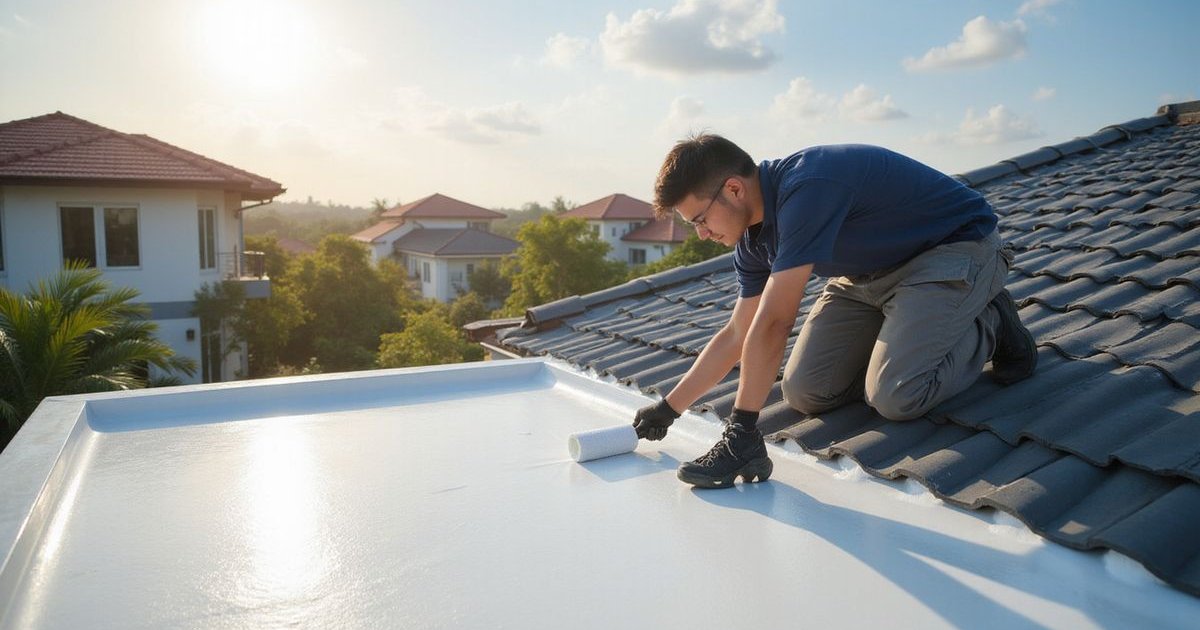
How to Reduce Roof Heat in Malaysia: Coatings, Insulation & More
Malaysian homes face a constant battle with heat, but recent changes have made winning this battle more urgent than ever. We know the feeling of walking up the stairs in a terrace house at 2:00 PM and hitting that invisible “wall” of heat. With the July 2025 TNB tariff hike increasing base electricity rates by over 13%, running the air conditioner non-stop to combat this heat is becoming a luxury many in the Klang Valley want to minimize.
Our team at Roofing Man has seen roof surface temperatures in Petaling Jaya easily exceed 60°C (140°F) on a clear afternoon. This thermal energy doesn’t just disappear; it radiates downward, turning your attic into an oven that bakes your living space long after the sun has set.
Here is a breakdown of the most effective, data-backed solutions to cool your home and lower those rising energy bills.
Understanding Roof Heat
Before we tear apart the ceiling, it helps to understand exactly how your home turns into a sauna.
- Solar Radiation: The sun strikes your roof tiles (clay, concrete, or metal).
- Absorption: Darker tiles absorb up to 90% of this energy.
- Conduction: The heat travels through the solid tile to the underside.
- Radiation (The Silent Killer): The hot underside of the roof deck radiates heat across the attic air gap to your insulation or ceiling plasterboard.
- Convection: Superheated air in the attic (often reaching 45°C-50°C) presses down on your ceiling.
Effective solutions must interrupt this chain at specific points.
Solution 1: Heat-Reflective Roof Coatings
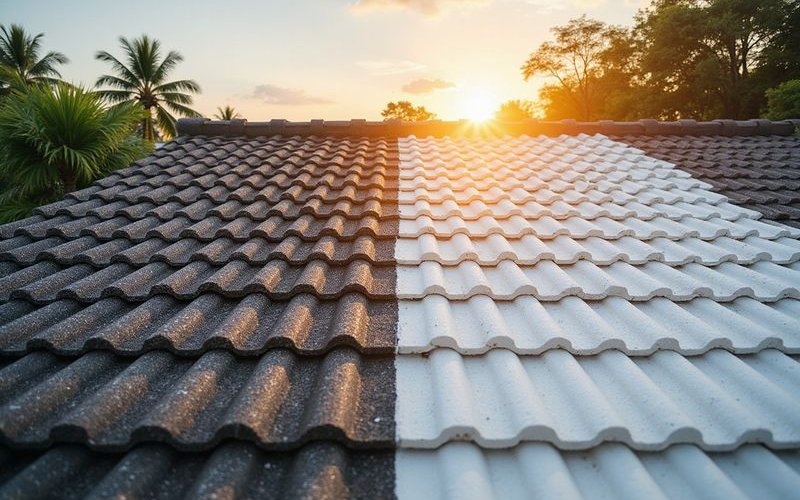
Reflective coatings act as a shield, bouncing solar radiation back into the atmosphere before it can be absorbed by your roof tiles.
How They Work
- Reflective Pigments: Specialized ceramic or acrylic compounds reflect UV and infrared rays.
- Thermal Barrier: They prevent the roof material itself from storing heat.
- Surface Reduction: Can lower the external roof surface temperature by significantly more than standard paint.
Types Available
DIY Heat-Reflective Paint (e.g., Nippon Paint Solaroof, Jotun Jotaroof):
- Best For: Budget-conscious homeowners willing to do maintenance.
- Application: Water-based acrylics that are easy to roll on.
- Pros: widely available in hardware stores.
- Cons: Thinner layer; typically requires re-coating every 3-5 years to maintain performance.
- Cost: RM2-5 per square foot (Material only).
Professional Elastomeric & Ceramic Coatings (e.g., LuminX, specialized contractors):
- Best For: Maximum heat reduction and waterproofing combined.
- Features: These are thick, rubber-like membranes often reinforced with ceramic microspheres.
- Pros: Seals hairline cracks (common in older PJ terrace houses) and offers superior durability (10+ years).
- Cons: Requires professional high-pressure spraying.
- Cost: RM15-30 per square foot (Supply & Install).
Actionable “Insider” Tip
We always warn homeowners about fungus preparation. In Malaysia’s humidity, simply painting over existing roof tiles without a high-pressure chlorine wash will cause the coating to peel within 12 months. You must kill the spores first, or you are just painting over dirt.
Solution 2: Roof Insulation
Insulation acts as a sponge or barrier, slowing the flow of heat from your attic into your cool bedroom.
Types of Roof Insulation
Rockwool (Stone Wool):
- The Industry Standard: Products like Rockwool Safe ‘n’ Silent Pro are dense (40kg/m³+), fire-resistant, and excellent at blocking sound—a huge plus if you have a metal roof and hate the sound of rain.
- R-Value: High thermal resistance; look for 50mm thickness as a minimum for Malaysian weather.
- Cost: RM8-15 per square foot (Installed).
Fiberglass Batts (Glass Wool):
- The Budget Option: Lightweight and commonly found in older developments.
- Drawback: We find that fiberglass tends to settle and compress over time, losing effectiveness faster than rockwool.
- Cost: RM5-10 per square foot (Installed).
Reflective Foil (Bubble Foil):
- The Radiant Blocker: A sheet of aluminium laminated over air bubbles.
- Usage: Often used in addition to mass insulation.
- Cost: RM3-8 per square foot (Installed).
Installation Location
- Ceiling Level (On top of plaster ceiling): The most common retrofit. It keeps the cool air in your room.
- Under Roof Tiles: Creates a cooler attic but is much harder to install in existing homes without removing the roof tiles.
Expected Results
- Room Temperature Drop: 2-5°C.
- Stability: Your room stays cool longer in the morning even as the sun comes up.
Solution 3: Radiant Barriers
Radiant barriers are specifically designed to stop the “Radiation” step of heat transfer.
How They Work
- Material: Usually a double-sided pure aluminium foil reinforced with a woven mesh.
- Mechanism: It reflects up to 97% of radiant heat.
- Critical Requirement: There must be an air gap (at least 1 inch) between the foil and the roof tiles. Without this gap, heat will conduct through the foil, rendering it useless.
Installation Options
- Truss Mounting: Stapled directly to the wooden or steel trusses under the tiles.
- Draping: Laid over the ceiling joists (though dust accumulation can reduce reflectivity over time).
Expected Results
- Attic Temperature Drop: 10-15°C.
- Comfort: You will feel an immediate difference if you go into the attic; it won’t feel like a furnace.
Solution 4: Improved Ventilation
Ventilation flushes out the hot air trapped in your attic and replaces it with cooler outside air.
Types of Ventilation
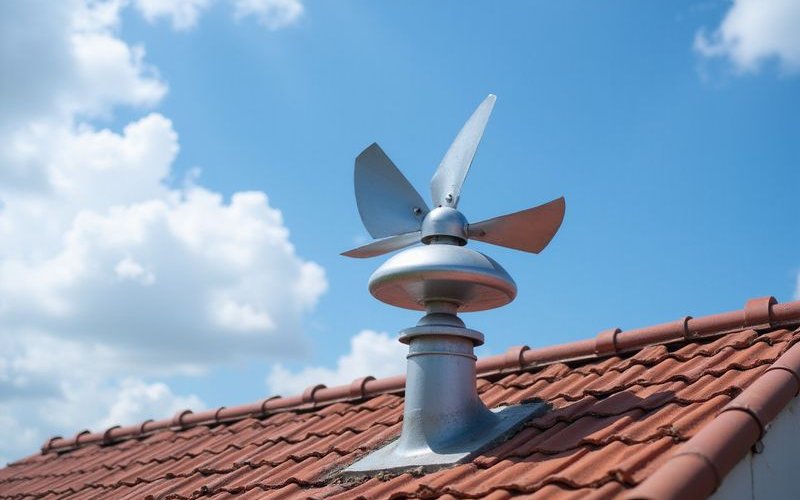
Active Solar Ventilation (e.g., Verdant Star, Cingnergy):
- The Modern Solution: These units use a small solar panel to power a fan that actively sucks hot air out of your roof void.
- Efficiency: One solar fan can often outperform 3-4 passive wind turbines.
- Cost: RM800 - RM1,500 per unit (Supply & Install).
Passive Turbines (“Whirlybirds”):
- The Old School: Relies on wind and rising heat to spin.
- Warning: We frequently replace these because the bearings fail after a few years of tropical rain, leading to annoying squeaking or leaks.
- Cost: RM250 - RM400 per unit.
Benefits
- Moisture Control: Reduces humidity in the attic, protecting your timber trusses from rot.
- AC Efficiency: By lowering the attic temp from 60°C to 40°C, your AC ducts (if running through the ceiling) don’t have to work as hard.
Solution 5: Roof Material Choices
If you are planning a major renovation or reroofing, the material you choose acts as the first line of defense.
The “Cool Roof” Hierarchy
- Glazed Light Clay Tiles: Excellent thermal mass (releases heat slowly) and high reflectivity.
- Zincalume/Metal (Light Color): Reflects heat well but has zero thermal mass—it heats up fast and cools down fast. Noise is the main trade-off.
- Concrete Tiles (Dark): The most common culprit in hot Malaysian homes. They soak up heat all day and release it all night.
Comparing Solutions
We have updated these estimated costs for the 2025/2026 market in the Klang Valley.
| Solution | Cost (RM/sq ft) | Temp Drop (Internal) | Energy Savings | Lifespan |
|---|---|---|---|---|
| Pro Reflective Coating | 15 - 30 | 3 - 5°C | 15 - 25% | 10 - 15 yrs |
| DIY Roof Paint | 2 - 5 (Material) | 1 - 3°C | 5 - 10% | 3 - 5 yrs |
| Rockwool Insulation | 8 - 15 | 3 - 6°C | 20 - 30% | 20+ yrs |
| Solar Ventilator | RM900-1500 (Unit) | 1 - 3°C | 10 - 15% | 10 - 15 yrs |
| Radiant Barrier | 3 - 8 | 2 - 4°C | 10 - 20% | 15+ yrs |
Combining Solutions for Best Results
No single solution is a magic bullet. The most effective strategy is a “System Approach.”
The “Basic Retrofit” (Best Value)
- Insulation: Lay 50mm Rockwool batts on top of your existing ceiling.
- Ventilation: Add one Solar Ventilator to keep the attic air moving.
- Result: A noticeable drop in bedroom temperature for a moderate investment.
The “Ultimate Cool Roof” (Premium)
- Coating: Professional heat-reflective coating on the exterior.
- Barrier: Radiant foil stapled to trusses.
- Insulation: 100mm high-density Rockwool above the ceiling.
- Ventilation: Active solar extraction.
- Result: Your house may remain comfortable without AC until late afternoon.
Cost vs. Benefit Analysis
Example Calculation (2026 Rates)
For a typical 1,500 sq ft terrace house in Selangor:
Current Situation:
- AC runs 10 hours daily.
- New Tariff Base: ~RM0.45/kWh (Domestic Tier 2/3 blended).
- Monthly Cooling Cost: ~RM200.
After Improvements (Premium Package):
- Energy Reduction: 40% (Conservative estimate).
- Monthly Savings: RM80.
- Annual Savings: RM960.
Investment:
- Premium improvements: ~RM8,000 - RM12,000.
- Payback Period: ~8 - 12 years.
While the financial payback takes time, the immediate increase in thermal comfort—sleeping without sweating or needing the fan at max speed—is instant.
Implementation Tips
- Check for Leaks First: We never install insulation on a roof that has active leaks; wet insulation is useless and breeds mold. Address any waterproofing issues before adding insulation.
- Don’t Block Airflow: When laying insulation, ensure you don’t cover the soffit vents (the small holes under your roof eaves). The attic needs to “breathe.”
- Think About Noise: If you live near a highway or noisy area, choose Rockwool over foil or foam, as it adds significant soundproofing.
- Verify the Contractor: Ensure your installer understands the importance of “air gaps” for radiant barriers.
- Safety First: Inspecting a roof involves heights and fragile tiles. If you aren’t confident, call a pro.
Conclusion
Reducing roof heat in Malaysian homes requires understanding how heat enters your living spaces and addressing the appropriate mechanisms. Often, a combination of reflective coating, proper insulation, and active ventilation provides the best results.
At Roofing Man, we can assess your roof’s current condition and recommend the most effective heat reduction solutions for your specific situation. Call us at 016-699 9077 to discuss your options.