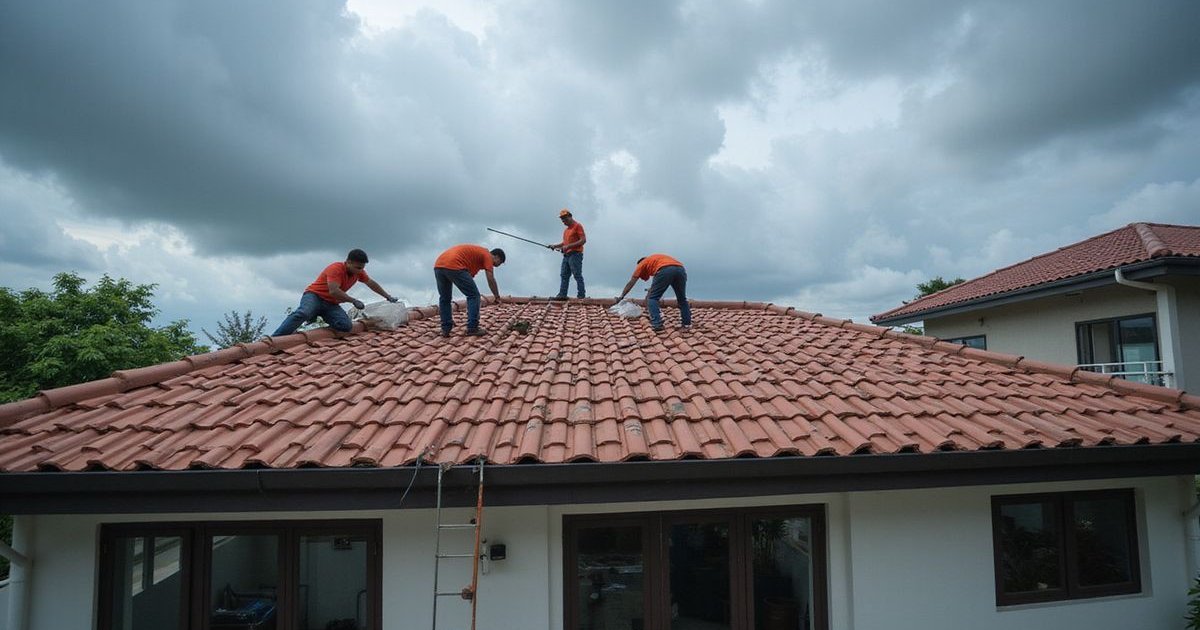
You know the feeling when those dark afternoon clouds start rolling over the Klang Valley. The air gets heavy, and you just know a massive downpour is minutes away.
We have spent over a decade on roofs across Petaling Jaya and KL, and the story is often the same. A homeowner ignores a small water stain in July, only to face a living room flood in November.
The data backs this up. Recent meteorological reports for Malaysia indicate that rainfall intensity during the monsoon transition periods is increasing. That standard “light repair” might not hold up against the 2,500mm of annual rainfall we now often see in this region.
We want to help you stay ahead of the weather. This guide breaks down exactly what to look for, how to test your drainage, and when to call in a professional before the storms hit.
When to Prepare
Timing is everything. In Malaysia, we deal with two main monsoon seasons, but the transition periods can be just as volatile.
We recommend marking your calendar based on your specific location.
| Region | Monsoon Phase | High-Risk Period | Start Inspection |
|---|---|---|---|
| West Coast (KL, PJ, Selangor) | Southwest Monsoon & Inter-monsoon | May-Sept & Oct-Nov | Late March |
| East Coast | Northeast Monsoon | Nov-March | Late September |
Don’t wait until the rains start. Once the monsoon season arrives, roofing work becomes difficult, dangerous, and expensive due to high demand.
Pre-Monsoon Inspection Checklist
You don’t always need a ladder to spot trouble. We suggest starting with a pair of binoculars from the ground before deciding if you need to go up.
Roof Surface
Tiles and shingles:
- Check for “hairline” cracks. These tiny fissures expand when water enters and the hot Malaysian sun heats the tile the next day.
- Look for “slipped” tiles. High winds during inter-monsoon storms often shift tiles near the eaves.
- Identify organic growth. Dark patches of moss or algae hold moisture against the tile surface, which speeds up degradation.
- Inspect the ridge capping. The cement mortar here often cracks after 5-10 years.
Metal roofing (Zinc/Aluminium):
- Test the fasteners. Rubber washers on screws degrade in our UV heat. If they look cracked, they will leak.
- Check for rust spots. Pay close attention to cut edges where the protective coating might be compromised.
- Look for lifted sections. Strong gusts can pry up sheets that aren’t properly screwed down.
Flashing and Seals
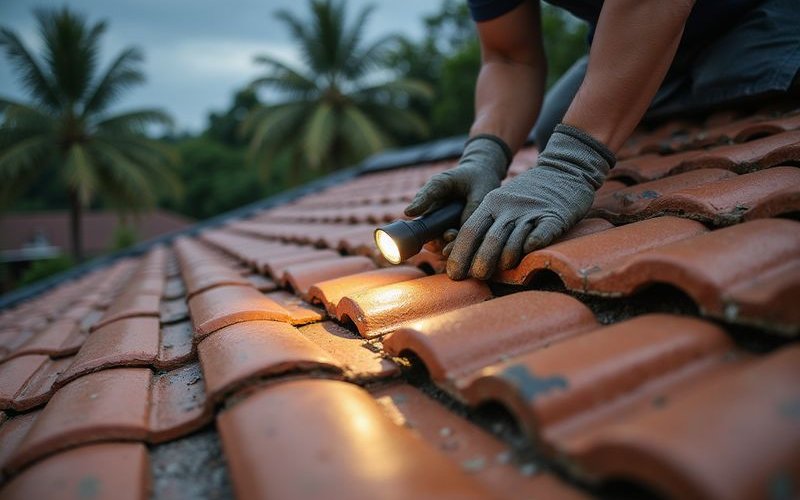
This is where 90% of the leaks we fix actually start. Flashing is the metal strip that waterproofs joints.
- Examine the chimney and vents.
- Check the wall abutments. Where the roof meets a wall, the flashing must be chased into the brickwork, not just glued on.
- Inspect valley gutters. These metal troughs collect high volumes of water. Rust here is a disaster waiting to happen.
- Test the sealant. If the silicone looks dried out or is peeling away, it needs immediate replacement with a UV-resistant polyurethane sealant.
Gutters and Drainage
Your roof is only as good as its ability to shed water.
- Clean all gutters thoroughly.
- Check gutter brackets. A gutter full of water is heavy. Weak brackets will cause it to sag and spill over.
- Verify the slope. Water should not pool in the gutter; it must flow toward the downpipe.
- Clear downpipe blockages.
- Inspect the drains. Ensure the water exiting the downpipe actually flows into the main drain and doesn’t pool at your foundation.
Attic/Interior
- Scan for light. Turn off the attic lights during the day. Any pinhole of daylight is a guaranteed water entry point.
- Check insulation. Compressed or stained insulation is a sign of a slow, long-term leak.
- Smell the air. A musty odor usually indicates mold growth from high humidity or trapped moisture.
Priority Repairs Before Monsoon
Not all roof issues are equal. You need to triage repairs based on the immediate threat to your home.
Urgent (Must Fix Before Monsoon)
Active leaks: Any known leak points must be addressed with professional roof leak repair. What drips now will pour during heavy rain.
Missing or severely damaged tiles: Open gaps are direct water entry points.
Failed flashing: Gaps around penetrations will let water in immediately.
Blocked gutters: Backup can force water under roof edges.
Important (Strongly Recommended)
Cracked tiles: May not leak now but will under heavy rain.
Deteriorating sealant: Fails under sustained water exposure.
Loose tiles: Can shift further and create gaps.
Sagging gutters: Will overflow, potentially causing edge damage.
Can Wait (If Budget Is Limited)
Moss/algae removal: Cosmetic if not blocking drainage.
Minor surface rust (metal): Won’t fail this season if recently developed.
Aesthetic issues: Focus on function first.
Gutter Preparation
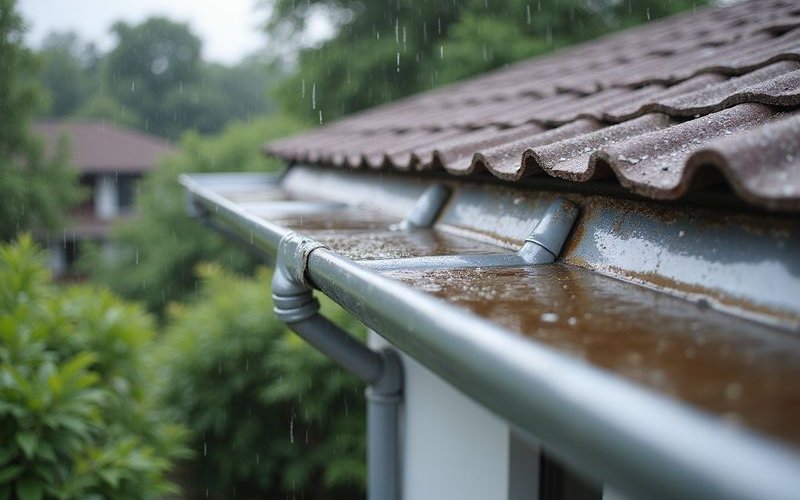
Gutters are critical during the monsoon. In the Klang Valley, rainfall intensity can exceed 100mm per hour. Standard gutters often overflow under this pressure if they aren’t perfectly maintained.
Cleaning Steps
- Remove large debris by hand. Wear heavy gloves to protect against rusty screws or sharp edges.
- Flush with a garden hose. Start at the high end and push fine sediment toward the outlet.
- Check flow. Watch how the water moves. If it pools, your pitch is wrong.
- Verify downpipes. If water backs up to the top, you have a clog in the vertical pipe.
- Test the exit. Ensure water drains freely at the ground level.
Common Problems to Fix
- Sagging sections. Reattach or replace loose brackets immediately.
- Leaking joints. Reseal these with a high-grade gutter sealant (like Sika or Pentens).
- Holes or rust. Small holes can be patched, but rusted sections usually require replacement.
- Insufficient capacity. If your gutters overflow every time it rains heavily, they may be too small for your roof area.
Preparing for Emergencies
Even with perfect preparation, a fallen tree branch or freak storm can cause damage. We advise every homeowner to have a “Plan B.”
Emergency Kit
Keep these accessible in your storeroom:
- Large heavy-duty tarps.
- Rope or bungee cords.
- Plastic buckets.
- A stable ladder. (Only use if the rain has stopped and it is safe).
- Waterproof flashlight.
- Contact number for a roofing contractor.
Know Your Contractor
- Save your roofing contractor’s number in your phone.
- Ask if they offer emergency tarping services.
- Understand that emergency call-out fees are standard in Malaysia, often ranging from RM 150 to RM 300 just for the visit.
- Have a backup contact. Good roofers are often fully booked during storm season.
Insurance Check
Review your policy now. Most standard Malaysian fire insurance policies cover storm damage, but they often exclude “wear and tear.”
- Check the “Storm and Tempest” clause.
- Take photos now. Documenting the good condition of your roof before the storm is your best proof against a “wear and tear” rejection later.
What If You Find Problems?
Minor Issues (DIY Possible)
- Cleaning gutters (single-story homes only).
- Applying sealant to accessible joints.
- Removing leaves and debris.
Major Issues (Call a Professional)
- Replacing ridge capping. This requires re-cementing and is heavy work.
- Steep roof repairs. Asian architectural styles often have steep pitches that are dangerous without harness gear.
- Internal structural damage. If rafters are rotting, you need a carpenter and a roofer.
- Widespread leaks. This usually indicates a systemic failure, not just a broken tile.
Important: Don’t attempt significant roof work yourself, especially near monsoon season. Wet clay tiles are as slippery as ice.
During Monsoon Season
After Heavy Rain
Do a quick audit after the first major storm of the season:
- Look for new water spots on your plaster ceilings.
- Check the attic for damp smells.
- Walk the perimeter and look for roof tiles on the ground.
- Note if gutters are overflowing like waterfalls (a sign of blockage).
If Leaks Develop
- Contain the water. Poke a small hole in the center of a sagging ceiling bulge to let water drain into a bucket. This prevents the whole ceiling sheet from collapsing.
- Clear the area. Move rugs and furniture.
- Document. Take photos immediately for insurance.
- Call for help. Contact your roofer.
- Stay off the roof. Never climb up during a storm.
Temporary Measures
If professional help is delayed:
- Use tarps inside the attic to divert water into buckets.
- Move electronics completely out of the affected room.
- If the leak is near an electrical fitting, turn off the power to that section of the house at the main DB box.
Post-Monsoon Actions
Assessment
- Check for shifted tiles. Wind often moves them without breaking them.
- Look for “scouring” in your drains where heavy water flow might have eroded the ground.
Repairs
- Replace any sealants that washed away.
- Fix the cosmetic damage to ceilings once the roof is watertight.
Planning
- Budget for a full roof inspection.
- Consider installing foil insulation if you noticed heat buildup along with moisture issues.
Hiring Help for Preparation
If your roof needs professional attention before the monsoon:
What to Look For
- CIDB Registration. Ensure the contractor is registered with the Construction Industry Development Board Malaysia.
- Specific Experience. Ask about their experience with your specific roof type (e.g., Monier tiles vs. Metal deck).
- Written Warranties. A verbal promise is worthless if a leak returns in two weeks.
- Safety Gear. Professional teams use harnesses and safety lines.
What to Avoid
- “Fly-by-night” contractors. These operators often knock on doors after storms offering cheap fixes.
- Vague quotes. “Roughly RM 500” often turns into RM 2,000 once work starts.
- Full upfront payment. A deposit is normal; 100% prepayment is a red flag.
Conclusion
Monsoon preparation is the single best investment you can make for your property’s longevity. A few hours of inspection and a few hundred Ringgit in maintenance can save you thousands in structural repairs and ruined furniture.
We specialize in helping Klang Valley homeowners secure their properties against the elements. At Roofing Man, our team offers comprehensive pre-monsoon inspections to identify weak points before they fail. Call us at 016-699 9077 to schedule your assessment.
Don’t wait for the thunder to start. Get your roof ready now and sleep soundly through every storm.