Picking the right roofing material for your Malaysian home is about much more than just curb appeal. From our experience working on roofs across the Klang Valley since 2013, the real challenge is handling the intense 3 PM heat and the heavy monsoon downpours.
We find that most homeowners only think about their roof when a leak appears or the house feels like an oven. The material you choose dictates your home’s comfort, energy bills, and how often you will need to call us for repairs.
This guide breaks down the practical realities of the four most common options in Malaysia so you can make a choice that lasts.
Clay Tiles
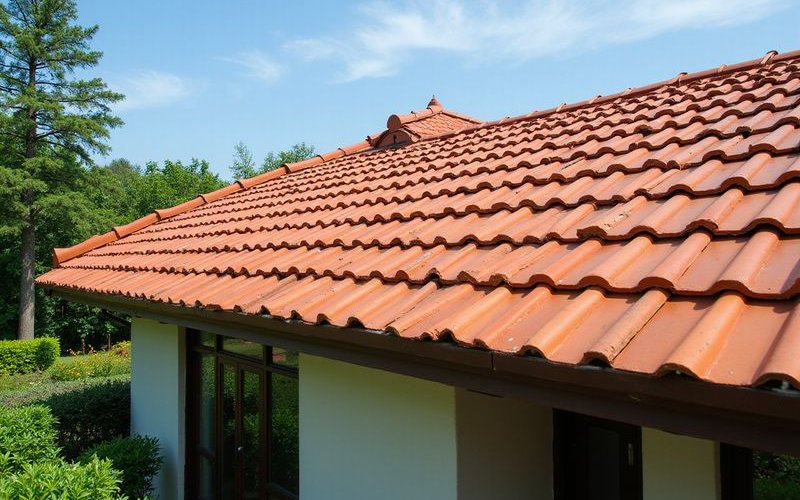
Clay tiles are the premium standard in Malaysia, often seen on heritage bungalows in Petaling Jaya and luxury developments. We frequently see these tiles lasting well over 50 years because they are baked at extremely high temperatures to lock in their strength.
Advantages
- Longevity: These tiles can easily last 50+ years with minimal structural degradation.
- Thermal Comfort: The natural density of clay creates a thermal lag that delays heat entering your attic.
- Color Fastness: Since the color is baked into the clay (terra cotta), it does not peel or fade like painted surfaces.
- Fire Resistance: They are non-combustible and completely fire resistant.
- Low Maintenance: Moss and algae are the only real concerns, which can be managed with occasional cleaning.
Disadvantages
- Significant Weight: A clay roof can weigh between 40kg to 50kg per square meter. Your roof truss system must be engineered to support this heavy load.
- Fragility: Walking on these tiles to fix an antenna or clean gutters often results in hairline cracks.
- Cost: This is typically the most expensive option upfront.
- Installation Precision: The interlocking mechanism requires skilled labor to prevent leaks during heavy wind-driven rain.
Actionable Tip
If you live near heavy foliage or in a humid area like Ampang, glaze matters. We recommend choosing glazed clay tiles over unglazed ones because the smooth surface prevents moss from rooting into the pores of the tile.
Cost
RM 18 - RM 38 per square foot installed Note: Prices vary based on the brand (e.g., Monier, Lama) and the complexity of your roof pitch.
Best For
Heritage restorations, high-end bungalows, and homeowners who plan to stay in their property for decades.
Concrete Tiles
Concrete tiles are the workhorse of the Malaysian housing market. We estimate that a large majority of terrace houses built in the last two decades use this material because it balances performance with cost.
Advantages
- Cost-Effective: You get the “tile look” for roughly 30% less than clay.
- High Strength: Concrete hardens over time and is generally less brittle than clay.
- Wind Resistance: Their heavy weight helps them stay put during strong tropical storms.
- Variety: Manufacturers can mold concrete into flat, modern profiles or traditional S-curves.
Disadvantages
- Water Absorption: Concrete is more porous than clay. Older tiles can become heavier when waterlogged, adding stress to the roof structure.
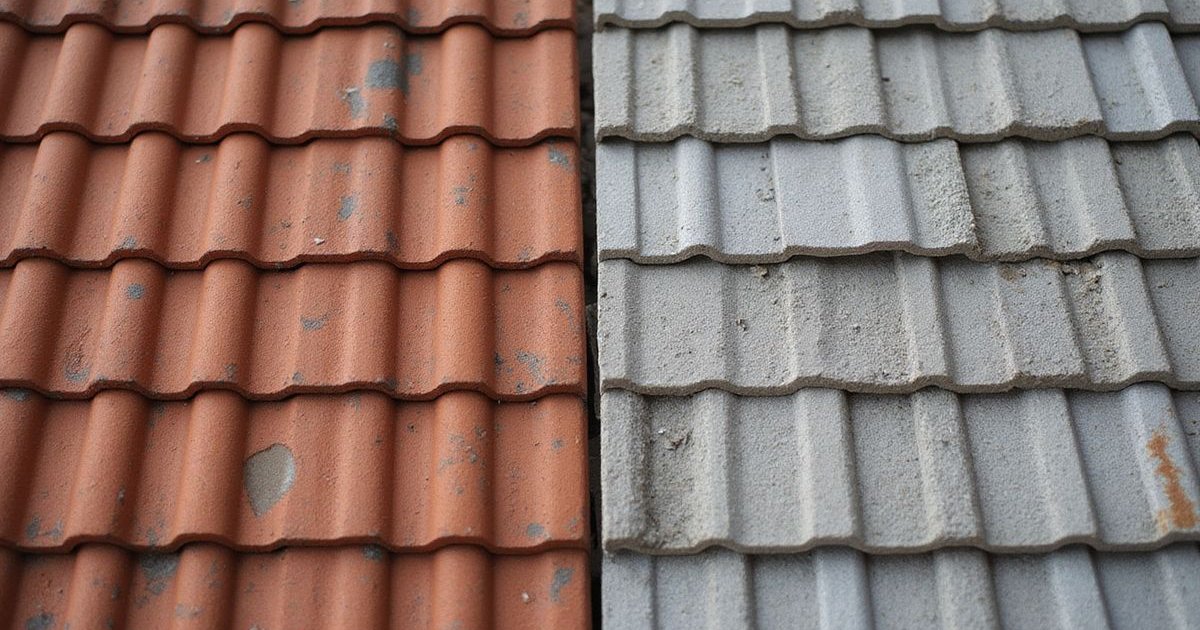
- Cosmetic Fading: The color is usually a surface coating or pigment. It will fade to grey after 15-20 years of exposure to the Malaysian sun.
- Algae Magnet: The porous surface is a breeding ground for black algae if not sealed properly.
The “So What” on Weight
Concrete tiles are heavy. If you are renovating an older house that originally had asbestos sheets or metal decking, you cannot just swap to concrete tiles. You would likely need to reinforce the entire timber or steel truss frame first.
Cost
RM 12 - RM 28 per square foot installed
Best For
Standard residential terrace houses, renovation projects on a strict budget, and developers.
Metal Roofing (Zinc/Aluminium/Steel)
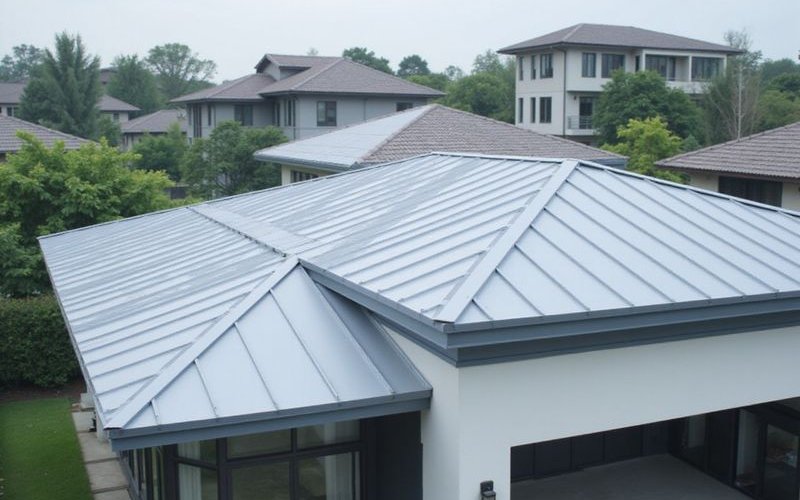
Metal roofing has shifted from being a “backyard extension” material to a premium choice for modern architecture. We are seeing a massive surge in demand for high-quality metal profiles like standing seam roofs in areas like Bangsar and Damansara Heights.
Advantages
- Incredible Durability: Premium brands (like BlueScope) offer warranties against corrosion that rival tile lifespans.
- Leak Prevention: Metal comes in long sheets (often custom-cut). Fewer joints mean fewer potential leak points.
- Low Pitch Capable: You can install metal on very flat roofs (down to 2-3 degrees), which is impossible with tiles.
- Speed: We can often cover a large roof area in half the time it takes to lay tiles.
- Heat Reflection: Modern “cool roof” coatings can reflect up to 70% of solar heat.
Disadvantages
- Acoustic Issues: Without proper insulation, the sound of heavy rain can be deafening inside the house.
- Dent Risks: Falling branches or heavy impact can leave permanent dents.
- Thermal Expansion: Metal expands in the heat and contracts at night. This can cause “creaking” sounds or loosen fasteners over time if not installed correctly.
- Rust Potential: Low-grade zinc sheets will rust quickly at screw holes and cut edges.
Insider Insight: The Thickness Metric
Don’t just ask for “metal roofing.” You need to specify the thickness (Base Metal Thickness or BMT). For residential homes, we strongly advise against anything thinner than 0.42mm. Thinner sheets (0.35mm) are cheaper but will warp and rust much faster.
Cost
RM 10 - RM 35 per square foot installed Price depends heavily on insulation type (e.g., PU Foam, Rockwool) and metal grade.
Best For
Modern architectural designs, houses with low-slope roofs, and owners who want to eliminate leak risks associated with cracked tiles.
Asphalt Shingles
Asphalt shingles are popular in the West but remain a niche product in Malaysia. We generally see these used on specific architectural styles or lightweight structures like gazebos.
Advantages
- Aesthetics: They offer a unique, textured look that stands out in a neighborhood of tiles.
- Lightweight: They impose very little load on the building structure.
- Flexible: You can easily install them on curved or complex roof shapes.
- Quiet: The granulated surface dampens rain noise effectively.
Disadvantages
- Heat Trap: Asphalt absorbs and holds heat. In our tropical climate, this can significantly increase your attic temperature without heavy insulation.
- Algae Growth: The granules can trap moisture and support fungal growth in humid conditions.
- Wind Lift: Strong monsoon winds can lift the edges of shingles if the adhesive seal fails.
- Lifespan: The intense UV radiation in Malaysia tends to dry out and crack the shingles faster than in cooler climates.
Cost
RM 8 - RM 18 per square foot installed
Best For
Garden structures, steep-pitched feature roofs, or renovations where structural weight is a major limitation.
Quick Comparison: 2026 Market View
We have compiled this table to help you compare the practical realities of each material in the Malaysian context.
| Factor | Clay Tiles | Concrete Tiles | Premium Metal | Asphalt Shingles |
|---|---|---|---|---|
| Real-World Lifespan | 50+ Years | 30-40 Years | 30-50 Years | 15-20 Years |
| Heat Insulation | Excellent | Good | Varies (Needs Insulation) | Poor |
| Leak Risk | Medium (Cracks/Slips) | Medium (Cracks) | Low (Fewer Joints) | Medium |
| Noise Control | Excellent | Excellent | Poor (Without Insulation) | Good |
| Maintenance | Low (Wash Only) | Medium (Sealant/Paint) | Low (Fastener Check) | Medium |
| Min. Roof Pitch | 20-25 Degrees | 20-25 Degrees | 2-5 Degrees | 15 Degrees |
| Est. Cost (per sqft) | RM 18 - RM 38 | RM 12 - RM 28 | RM 10 - RM 35 | RM 8 - RM 18 |
Factors to Consider for Malaysian Climate
Handling the Monsoon Rain
Water volume is not the only issue; wind-driven rain is the real enemy.
- Tiles: We recommend installing a high-quality radiant barrier foil under the tiles. This acts as a secondary waterproof layer if water gets blown under the laps.
- Metal: Ensure your contractor uses screws with EPDM washers (high-quality rubber) to prevent leaks at fastening points.
Managing the Urban Heat
Klang Valley homes suffer from the “Urban Heat Island” effect.
- Ventilation is Key: Regardless of the material, you must have adequate roof ventilation (like turbine vents or ridge vents) to let hot air escape.
- Color Choice: Lighter colors reflect heat. A white or light grey metal roof will keep your attic significantly cooler than a dark charcoal one.
Making Your Decision
Choose Clay Tiles If:
- You want the absolute best aesthetic for a traditional or Mediterranean-style home.
- Your budget allows for a “do it once, do it right” investment.
- The existing roof structure is verified to handle heavy loads.
Choose Concrete Tiles If:
- You want a durable, traditional look without the premium price tag of clay.
- You are matching the look of neighboring houses in a terrace development.
- You accept that you might need to repaint the roof in 15 years.
Choose Metal Roofing If:
- You are facing persistent leaks with your current tiled roof (often due to low pitch).
- You prefer a modern, industrial, or minimalist aesthetic.
- You want to reduce the structural weight on an older building.
Choose Asphalt If:
- You are roofing a gazebo, shed, or steep-sloped feature area.
- The structure is too weak to support tiles, and you dislike the look of metal.
Working with What You Have
Replacing a roof is rarely a simple swap. If you change from metal to tiles, you might need to rebuild your entire truss system. Conversely, switching from tiles to metal often requires adding new battens to support the sheets.
We strongly suggest getting a professional assessment before falling in love with a specific material.
Conclusion
There is no single “perfect” material, but there is definitely a right choice for your specific budget and building type. Whether you choose the heritage appeal of clay or the modern sleekness of metal, the installation quality during your roof replacement is what ultimately determines if your roof leaks or lasts.
For a personalized assessment of your home’s needs, contact Roofing Man at 016-699 9077. We can inspect your current structure and help you calculate the most cost-effective solution for your home.